 unknown | en

Blog Post
What is Food-Grade Stainless Steel?
Oct. 28, 2026
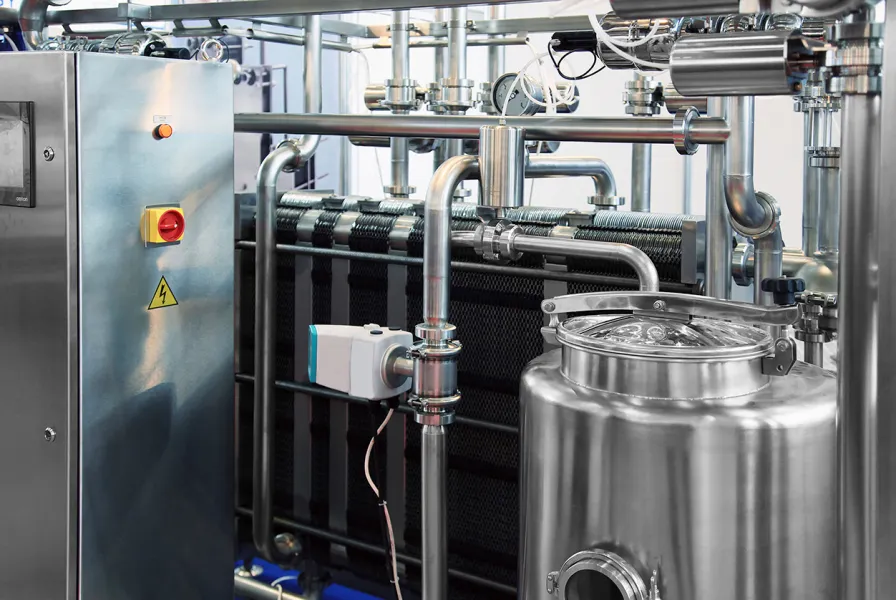
Food safety is the highest priority for consumers and producers alike. When you think of food production, stainless steel may not be something that typically comes to mind, but perhaps it should.
Stainless steel plays a crucial part in the production and safety of our food. In the food processing industry, stainless steel is used throughout the entire process from harvesting, handling, and storing, to cooking and serving. About 200,000 tons of stainless steel is used each year by the food processing industry in North America alone.
What is Stainless Steel?
Stainless steel is a combination of metals, also known as an alloy. Resistant to tarnishing and rust, stainless steel is made of some of the most basic elements found on Earth: iron ore, chromium, silicon, carbon, nitrogen, and manganese.
To be recognized as stainless steel, the composition must have a minimum of 10.5% chromium content by mass and a maximum of 1.2% carbon by mass. Chromium is the element that gives stainless steel its famous corrosion resistance. Contrary to its name, stainless steel is not truly stainless; the chromium helps it to withstand abuse for much longer before showing signs of wear compared to standard steel without chromium.
There are more than 57 types of stainless steel recognized as standard alloys, in addition to many proprietary alloys produced by different stainless steel manufacturers. These different types are distinguished by their unique composition.
Why is Stainless Steel Used in the Food Industry?
For many sanitary food handling applications, stainless steel is a popular material choice. Not only can food-grade stainless steel stand up to harsh temperatures that would melt plastic, the material’s protective oxide layer helps prevent the formation of rust that could contaminate foods. Perhaps the most important reason is that food-grade stainless steel contains no chemicals that can migrate into foods.
Additional benefits of using stainless steel in the food industry include:
- Corrosion resistance: Stainless steel is especially resistant to corrosion and rusting compared to other metals, which makes it perfect for use in the kitchen. Food-grade stainless steel is often used for kitchen equipment, which can be costly to install. But, because most grades of stainless steel are highly corrosion-resistant, the equipment does not need to be replaced as frequently.
- Strength: Food-grade stainless steel is extremely strong, making it an excellent material to use in heavy-duty equipment or in shelving for storage areas.
- Ease of cleaning: Other materials, such as wood or plastic, have grooves or openings where bacteria can invade and grow. Stainless steel is smooth and doesn't provide a place for bacteria to hide, allowing it to be easily cleaned. When cleaning stainless steel, it is important to always use a food-grade stainless steel cleaner.
- Non-reactive surface: Stainless steel is a non-reactive metal, which means that you can use it to cook foods that are acidic, such as citrus, tomatoes, and vinegar. Other metals, like aluminum and iron, are reactive. Cooking acidic foods in these metals may affect the flavor of the food, typically adding a metallic flavor, and can damage the surface of the metal.
- Cost: When properly cared for and maintained, stainless steel has low maintenance costs.
Manufacturers in the food industry must follow very strict guidelines set by federal governing bodies to prevent product contamination. According to the U.S. Food and Drug Administration, to be considered food-safe, a material must meet several conditions, it must:
- Be “durable, corrosion-resistant, and nonabsorbent”
- Possess sufficient “weight and thickness to withstand repeated warewashing”
- Be “finished to have a smooth, easily cleanable surface”
- Resist “pitting, chipping, crazing, scratching, scoring, distortion, and decomposition”
- Prevent the migration of “deleterious substances” or “impart colors, odors, or tastes” to food
What are the Most Common Types of Stainless Steel?
Just because stainless steel is labeled “food safe” does not mean that it is the right material for your facility or production process. There are many different types of food-grade stainless steel, each containing different compositions and properties. The two most common types are 304 and 316L.
304 Stainless Steel
Also known as “18-8” stainless steel, because it contains 18% chromium and 8% nickel, 304 is the most common stainless steel used around the world. It accounts for more than 50% of all stainless steel produced. Cheaper than 316L, 304 is an economical and practical choice for most environments.
304 can withstand corrosion from most oxidizing acids. This durability makes it easy to sanitize, and therefore ideal for many kitchen and food applications. It also has good forming and welding properties, allowing it to be manufactured into a variety of shapes.
Common uses for 304 stainless steel include brewing, milk processing, and winemaking. It is also found in most refrigerators, stoves, sinks, dishwashers, fermentation vats, and storage tanks and can withstand corrosion caused by various chemicals found in fruits, meats, and milk. One of 304’s biggest weaknesses is its susceptibility to corrosion from chloride solutions, or from saline environments such as saltwater.
 Food and beverage storage tanks are often made from 304 stainless steel due to their ability to withstand corrosion.
316L Stainless Steel
With an almost identical composition to 304, the second most common stainless steel, 316L, contains 16% chromium, 10% nickel, and 2% molybdenum. Molybdenum is a naturally occurring metallic element mined around the world and used in applications ranging from stainless steel production to industrial alloys. In 316L stainless steel, molybdenum is the key to increasing resistance to corrosion. Molybdenum helps the metal resist pitting (a form of corrosion that leads to the creation of small holes in metal) in chloride ion solutions and increases strength at high temperatures.
316L is more commonly found in applications involving chemical processing, highly sterile factory environments, medical and pharmaceutical production as well as high salinity environments such as coastal regions. Although typically more expensive than 304, this additional cost can be justified by 316L’s extra resistance to corrosion, enabling it to last much longer than 304 stainless steel in these applications.
 In food processing facilities, the ability to sanitize thoroughly is essential for safety.
Stainless steel can be easily cleaned and can withstand repeated washing with many chemicals and detergents.

How to Select the Right Stainless Steel
It is difficult to distinguish between 304 and 316L visually; however, the composition makes all the difference. Selecting the correct stainless steel for your operation is vital to safe production and cost efficiency. Deciding what stainless steel will work best for you ultimately depends on the application.
304 stainless steel may be a better choice if:
- The application requires unique formability - 304 has good forming and welding properties.
- The application involves cost concerns - 304 is more affordable.
316L stainless steel may be a better choice if:
- The application includes highly corrosive elements such as salt.
- The material will be placed underwater or exposed to water consistently.
- The application requires greater strength and hardness.
How Should Food-Grade Stainless Steel Be Cared For?
Selecting the appropriate stainless steel is only part of maintaining a sanitary food processing environment. Proper care and maintenance are also important for preserving the corrosion-resistant properties of stainless steel. Regular attention to cleaning, drying, and potential sources of corrosion can help protect stainless steel equipment throughout its service life.
Avoid Contact with Dissimilar Materials
Never leave rubber mats, fittings, wrenches, etc. in contact with stainless steel. These objects can prevent complete drying and interfere with the formation of the protective oxide film. When dissimilar metals come into contact while wet, galvanic corrosion can also occur.
Check for Stray Electrical Currents
Regularly check electrical devices connected to stainless steel equipment for stray currents caused by improper grounding, damaged insulation, or other defects. Stray currents that come into contact with wet stainless steel can contribute to pitting corrosion.
Rinse and Clean Equipment Properly
Immediately rinse equipment after use with warm water until the rinse water is clear. Clean the equipment, either manually or through clean-in-place (CIP) processes, as soon as possible after rinsing. Product deposits can cause discoloration, deposits, and pitting beneath the particles.
Prevent Pitting and Corrosion
Proper cleaning and maintenance help preserve stainless steel’s protective properties and reduce the risk of pitting, discoloration, and other forms of corrosion.
Use Appropriate Cleaning Tools
For manual cleaning, use only soft, non-metallic brushes, sponges, or pads. On polished stainless steel surfaces, brush with the grain to avoid scratching. Scratches can promote corrosion and pitting over time. Metal particles left on a stainless steel surface can also cause pitting.
Follow Instructions for Chemical Bactericides
Use chemical bactericides exactly as prescribed by the chemical manufacturer in concurrence with local health authority requirements. Use the lowest permissible concentration, temperature, and exposure time possible. Flush the stainless steel immediately after bacterial treatment, and never allow the solution to remain in contact with stainless steel for more than 20 minutes. Chlorine and other halogen bactericides can destroy the protective film on stainless steel, while increased temperatures can accelerate corrosion.
Inspect Pipeline Joints and Connections
Regularly inspect pipeline joints and make sure all connections are tight fitting without binding. Improperly sealed gaskets can create small crevices where corrosion can occur. Stainless steel under stress can also develop stress cracking, particularly when exposed to bactericides containing chlorine.
Regularly Inspect for Surface Corrosion
Regularly inspect equipment for signs of surface corrosion, including pitting, deposits, and stress cracks. If deposits or discoloration are detected, remove them immediately using mild scouring powder and detergents. Rinse the equipment thoroughly and allow it to air dry. If corrosion is not removed, the protective film cannot be restored and corrosion will continue at an accelerated rate.
Use Recommended Cleaning Compounds
Use only cleaning compounds recommended for stainless steel. Purchase chemicals from reputable and responsible chemical manufacturers familiar with stainless steel processing equipment and that continuously check the effects of their products on stainless steel.
What are 3-A Sanitary Standards?
Food processing equipment must be designed and constructed to support sanitary operation and effective cleaning. 3-A Sanitary Standards, Inc develops standards and accepted practices for the sanitary design, fabrication, installation, and cleanability of equipment used to handle, process, and package consumable products. Dixon sanitary fittings are 3-A SSI certified.
Summary
Dixon offers a full line of 304 and 316L stainless steel products, including valves, and pumps, used in the food, beverage, and pharmaceutical markets.
For more information about Dixon products and to get help selecting the right stainless steel component for your application, visit dixonvalve.com or call 877.963.4966.
